


Health & Lifestyle

Graphic from Getty Images

Story by Cerise Woodward

As greeting time approached during a recent Sabbath service, I braced myself.  You know the moment. A well-meaning church member smiles warmly while at the pulpit and asks, “Do we have any visitors? Please stand and introduce yourself!” Then comes the invitation to “show God’s love” with enthusiastic hugs and handshakes.  

Story by Michele Joseph, photos by Elisabeth Zeller

The doctor is in.

In November, doctors, nurses and representatives from the biggest health care organizations in the northern Virginia joined forces for the Vienna Health Fair hosted by Potomac Conference's Vienna church  and Vienna Adventist Academy in Virginia.

Sabbath school classrooms became clinics and the gymnasium transformed into a diagnostic center and medical information hub. Visitors and members received eye exams, blood pressure checks, flu vaccinations and physician consultations and dental screenings all for free.

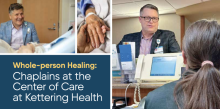
Exceptional patient care begins with treating illness and injury, addressing the body’s intricate complexities. But it doesn’t end there. Truly exceptional care also recognizes and responds to the human spirit, affirming each person’s inherent dignity and worth—understanding humans as more than their biology.

Increasingly, research and experience affirm this holistic approach as healthcare moves toward values-based models. Yet, this philosophy is not new. Seventh-day Adventist healthcare has long embraced this view, seeing every patient as an image-bearer of God.

Plant protein from Getty Images 2207843784

Story by V. Michelle Bernard

Trends promoting meat as a superior source of protein may be leading some to reevaluate their long-held beliefs on veganism. However, a recent study has found that vegan proteins can be just as effective in supporting muscle growth as meat-based proteins when consumed in the appropriate quantities.